

Running a small business is already a full-time job. You are serving customers, managing a team, fixing problems, and paying bills. Marketing often ends up at the bottom of the list, something you get to when you finally have a free hour.
That is exactly where a digital marketing agency can help. So, what does a digital marketing agency do for small businesses?
In This Guide
- The short answer
- What an agency does in real life
- Why small businesses need digital marketing
- 10 digital marketing services explained
- How an agency helps you get customers
- What an agency does every month
- How to choose the right agency
- FAQ
The Short Answer
A digital marketing agency helps your business get found online, attract the right people, turn visitors into leads or customers, and measure what is actually working. Depending on your needs, that can include SEO, local SEO, social media, Google Ads, website design, content, email marketing, conversion optimization, and analytics.
But hiring an agency should never mean paying someone to post on Facebook and send you a monthly report. A good agency helps you answer a far more important question: how can our marketing bring more of the right customers to our business? Let’s break it down in plain language.
What Does a Digital Marketing Agency Do, in Real Life?
Imagine you own a local plumbing company. Someone in your city searches Google for “emergency plumber near me.” A digital marketing agency can help your business show up in that search through local SEO or paid ads. The person visits your website, sees your services, finds your phone number, and calls you.
That is digital marketing working as a business system, not just a collection of social media posts. Depending on your goals, an agency may help you:
- Get found on Google
- Improve your website
- Generate leads
- Run online advertisements
- Manage social media
- Create useful content
- Build your local presence
- Improve online reviews
- Follow up with potential customers
- Measure marketing results
The exact mix depends on your business, your customers, your competition, and your goals.
Why Do Small Businesses Need Digital Marketing?
People now use the internet to decide what to buy and who to buy from. Before contacting a business, a potential customer will usually search Google, visit the website, read reviews, check social media, and compare a few competitors. If your business is hard to find or your website does not build trust, that customer quietly moves on to someone else.
Picture two competing cleaning companies. Company A has an outdated website, few reviews, no clear pricing, an unoptimized Google Business Profile, and little helpful content. Company B has a professional website, strong Google visibility, recent reviews, clear service pages, easy contact options, and helpful social media content.
Even if both companies clean equally well, Company B will find it much easier to win customers online. That is the biggest reason digital marketing matters for small businesses.
Digital Marketing Services a Small Business Can Get
Not every business needs every service. A good agency starts by understanding your business, then recommends the channels that make sense for your goals. Here are the most common ones.
Search Engine Optimization (SEO)
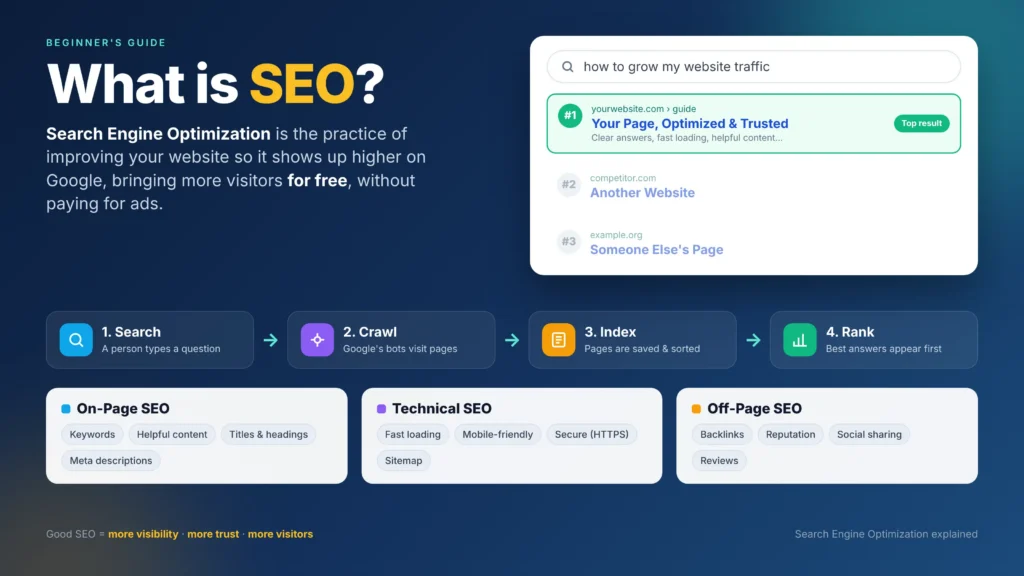
SEO helps your website appear in search results when people look for products, services, or information related to your business. For example, a bakery in Lahore may want to appear for “best birthday cakes in Lahore.” An SEO team may work on:
- Keyword research
- Website structure, page titles, and descriptions
- Service and product pages
- Helpful blog content and internal links
- Technical SEO, website speed, and mobile experience
SEO takes time because a website has to earn visibility and trust. When it is done properly, though, it brings relevant visitors without paying for every single click.
Local SEO
Local SEO matters most for businesses that serve a specific city or area, such as dentists, restaurants, plumbers, salons, gyms, lawyers, real estate agents, clinics, repair companies, and local retailers. When someone searches for a service nearby, your business needs to be easy to find.
An agency can optimize your Google Business Profile, improve your location pages, encourage genuine customer reviews, and keep your business details consistent online. If someone searches “dentist near me,” your goal is not just a website visit. You want that person to find your business, trust it, and then call or book an appointment.
Pay-Per-Click Advertising (PPC)
PPC lets you pay for ad space on Google and social media. An online furniture store might advertise for “buy modern sofa online,” and a local electrician might run ads for “emergency electrician in Lahore.” The big advantage is speed: SEO can take months, while a well-managed campaign can send targeted traffic much sooner.
However, paying for clicks does not automatically mean making money. A good agency will ask:
- Who should see the ad?
- What should the ad say?
- Where should the visitor land?
- How much does each lead cost?
- How many leads become customers?
- Is the campaign actually profitable?
Social Media Marketing
Social media helps you build awareness, talk to customers, and promote your products or services on platforms such as Instagram, Facebook, LinkedIn, or TikTok. But it is much more than posting a picture every day. A solid plan may include content planning, educational posts, product demonstrations, short videos, customer stories, promotions, community engagement, and paid social ads.
A clothing brand, for example, with a clear brand color palette and fonts, can use Instagram to show new collections, customer outfits, styling ideas, and behind-the-scenes moments. The goal is to give people a reason to remember and trust your brand, not just to publish more posts.
Content Marketing
Content marketing means creating useful information that attracts potential customers: blog posts, guides, videos, tutorials, case studies, FAQs, and downloadable resources. If you sell accounting software, you could skip the constant “buy our software” message and publish “How to Track Business Expenses” or “Small Business Bookkeeping Checklist” instead.
Someone searching for that help may discover your company for the first time. Good content attracts people before they are ready to buy and builds trust before they contact you. AI tools can speed this up, as we explain in how AI is transforming web design, but human editing keeps it accurate.
Website Design and Development
Your website is where most of your marketing ends up. You can have excellent ads, SEO, and social media, but if the site is slow, confusing, or hard to use, visitors will leave. An agency can improve your design, mobile responsiveness, page speed, navigation, service and product pages, landing pages, contact forms, calls to action, and overall user experience.
If your ad says “Book a Free Consultation” but the page has no obvious booking button, you lose the lead. Good marketing makes the next step easy. If you need a stronger site, take a look at our web design offerings and portfolio.
Conversion Rate Optimization (CRO)
Getting visitors is only half the job. Conversion rate optimization focuses on increasing the percentage of visitors who take an important action, such as calling you, filling out a form, booking an appointment, buying a product, requesting a quote, or joining your email list.
If 1,000 people visit your website and only five contact you, traffic may not be your problem. Your website may need work. An agency can test headlines, buttons, layouts, forms, offers, and landing pages to make taking action easier.
Email Marketing
Email keeps you connected with people who have already shown interest. An online clothing store can send new product announcements, special offers, abandoned-cart reminders, recommendations, and styling tips. A service business can share helpful advice and follow up with past customers. You are talking to people who already know you, instead of constantly chasing brand-new audiences.
Online Reputation Management
Before contacting a business, many customers check its reviews. An agency can help you set up a simple system to monitor reviews, encourage genuine feedback, respond professionally, spot recurring complaints, and improve customer communication. The goal is not to manufacture positive reviews. It is to make it easy for happy customers to share their real experiences.
Analytics and Performance Tracking
Without tracking, you know you spent money on marketing but not whether it produced anything valuable. An agency should track website traffic, leads, phone calls, form submissions, cost per lead, conversion rates, sales, ad performance, and search visibility, and connect those numbers to real business results.
Getting 10,000 website visitors sounds impressive, but getting 100 qualified leads from 2,000 visitors may be far more valuable.
How a Digital Marketing Agency Helps You Get Customers
The easiest way to understand digital marketing is to follow the customer journey.
- Get attention. Your potential customer discovers you through Google, social media, ads, YouTube, online directories, or content.
- Bring them to your website or profile. Your website, Google Business Profile, social page, or landing page gives them enough information to continue.
- Build trust. Reviews, testimonials, helpful content, professional design, and clear information answer the question “Can I trust this business?”
- Encourage action. Make the next step obvious: call now, request a quote, book an appointment, buy now, or get a free consultation.
- Follow up. Not everyone buys on the first visit. Email, remarketing, sales follow-ups, and useful content bring interested people back.
- Measure the results. Find out what produced customers and what wasted money.
This creates a cycle: attract, engage, build trust, convert, follow up, measure, improve. That is where a good agency adds real value.
Digital Marketing for Different Types of Small Businesses
There is no single strategy that works for everyone.
Local Businesses
A local restaurant might focus on local SEO, Google Business Profile, reviews, social media, local ads, and website optimization. The goal is more calls, reservations, directions, or walk-in customers.
E-commerce Businesses
An online store may focus on product SEO, Google Shopping, social ads, product content, email marketing, remarketing, and conversion optimization. The goal is usually more profitable online sales.
Service Businesses
A lawyer, consultant, contractor, or accountant may focus on SEO, local SEO, educational content, Google Ads, landing pages, lead forms, and reviews. The goal is qualified inquiries.
B2B Businesses
A B2B company may use SEO, LinkedIn, industry content, case studies, email marketing, and lead-generation campaigns. Sales cycles are longer, so building trust and nurturing prospects is especially important.
What Does a Digital Marketing Agency Do Every Month?
This is a question every business owner should ask before hiring. The answer depends on the services you buy, but the process usually follows a simple loop: plan, create, launch, measure, improve.
An SEO campaign might include:
- Finding new keyword opportunities
- Improving existing pages
- Publishing useful content
- Fixing technical issues
- Monitoring rankings and traffic
- Reviewing competitors
- Reporting progress
A paid advertising campaign might include:
- Reviewing campaign performance
- Testing new ads
- Adjusting audiences
- Improving landing pages
- Managing budgets
- Tracking leads
- Reducing wasted spend
A social media plan might include:
- Planning and creating the month’s content
- Publishing and scheduling posts
- Replying to comments and messages
- Reviewing which posts get the best response
- Adjusting the plan based on results
How to Choose the Right Digital Marketing Agency
Before you sign anything, ask these questions:
- What exactly will you do for my business each month?
- How will you measure success, and which numbers will I see?
- Who owns my website, ad accounts, and data?
- Have you worked with businesses like mine?
- Will I get clear reports in plain language?
A trustworthy agency explains things simply, sets realistic expectations, and focuses on business results rather than vanity numbers.
Frequently Asked Questions
What does a digital marketing agency do for a small business?
It plans and manages online marketing, such as SEO, social media, ads, content, email, and website improvements, to help you get found, attract leads, and win customers.
How much does a digital marketing agency cost?
Costs vary by services, competition, and goals. Ask for a clear scope and a monthly breakdown so you know what you are paying for. You can see our own packages on the Renisence pricing page.
How long does digital marketing take to work?
Paid ads can bring traffic quickly, while SEO and content usually take a few months to build momentum.
What is the difference between SEO and local SEO?
SEO helps your website rank for searches anywhere, while local SEO focuses on searches near a specific location, such as “dentist near me”. Local SEO relies heavily on your Google Business Profile, reviews and consistent business details.
Do small businesses really need a digital marketing agency?
Not always. If you have the time and skills, you can do some of it yourself. An agency helps when you want expert strategy, consistent execution, and proper tracking without adding to your workload.
Final Thoughts
A digital marketing agency should do more than keep your social pages busy. It should help the right people find you, trust you, and take action, and it should show you what is working. If you are ready to grow online, contact our team and let’s talk about what would work best for your business.